
CNC Jali & Decorative Metal Screens for Elevations
Laser-sharp patterns in steel that add privacy, shade and a signature look to your front elevation.
CNC decorative screens are mild steel (MS) sheets cut into patterns on computer-controlled laser or plasma machines, then edge-finished, coated and fixed on a steel frame as jali panels for elevations, balconies, staircases and boundary screens. Cladex Elevations designs, frames and installs CNC decorative screens across Tamil Nadu and Kerala.
A CNC jali brings the old idea of the carved stone screen to modern elevations. A mild steel sheet is cut into a pattern on a computer-controlled (CNC) laser or plasma cutter, so even intricate geometric, floral or custom designs come out sharp and repeatable. Fixed on a steel frame in front of a balcony, staircase, window or blank wall, the screen filters light and views, gives privacy from the street, and casts patterned shadows that change through the day.
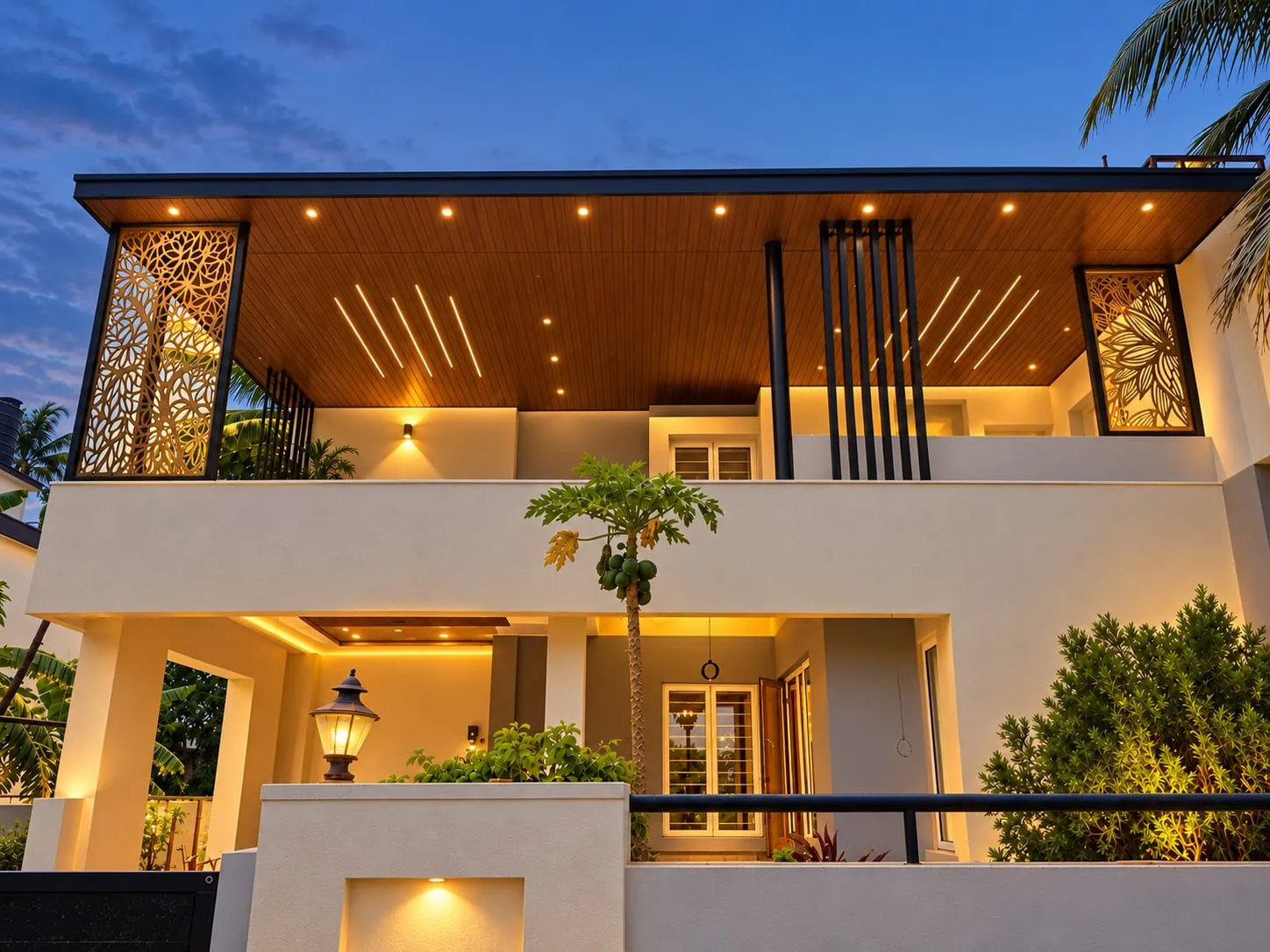
Our decorative screen work is led by Er. Sanjay M. and Er. Aravind M., civil engineers from CIT Coimbatore, with more than 10 years of facade experience behind the team. One example is a private residence in Kovaipudur, Coimbatore, where we installed a CNC-cut decorative MS plate screen as a feature of the elevation.
A good screen needs more than a nice pattern. Cut edges must be cleaned and coated properly or rust will show within a few monsoons, and a large screen acts like cladding that catches wind, so the frame and anchors must be designed for it. This page explains how we make and fix CNC screens, how MS compares with other jali materials, and what affects the cost.
Why choose CNC Decorative Screens
A signature front elevation
A custom pattern, whether geometric, floral, traditional or a motif of your own, makes the elevation instantly recognisable.
Privacy with air and light
Screens block direct views into balconies, staircases and rooms while still letting breeze and filtered daylight through.
Shade and shadow play
The pattern breaks up harsh sun and throws changing shadows on the wall and floor behind, especially striking in the evening light.
Strong and secure
Mild steel is far stronger than MDF or wooden jali and suits exterior use when it is properly coated and framed.
Precise and repeatable
CNC cutting reproduces the pattern accurately across many panels, so joints line up and the design flows across the facade.
Looks good at night
Backlighting or uplighting behind a screen turns the pattern into a glowing feature after dark.
Options & technical details
Typical choices we discuss with clients. The final specification is fixed after a site visit.
| Material | Mild steel (MS) sheet or plate |
|---|---|
| Cutting method | CNC laser or plasma cutting from a digital pattern drawing |
| Edge finishing | Deburring and cleaning of cut edges before coating |
| Surface protection | Powder coating, or primer with enamel or PU paint |
| Frame | MS hollow-section frame anchored to the structure, designed for wind loads |
| Patterns | Geometric, floral, traditional jali or custom artwork, set for the open area and privacy needed |
| Options | Backlighting or uplighting, combination with ACP or glazing on the same elevation |
How we make and fix CNC decorative screens
We first fix the size of the screen, the panel divisions and the pattern. The pattern is checked against the panel joints so that motifs do not stop awkwardly at an edge, and the open area is chosen to balance privacy, light and air. The sheet thickness is matched to the panel size and pattern, because a very open pattern in thin sheet can flex and look wavy.
The panels are then cut on CNC laser or plasma machines from the approved drawing. Every cut edge is deburred and cleaned, since a sharp or dirty edge is where paint fails first and rust begins. The panels and their frame are coated, by powder coating or by primer and enamel or PU paint, with attention to edges, holes and the back face.
On site, an MS hollow-section frame is anchored into RCC members and set true, and the panels are fixed to it. Because a screen works like cladding, it catches wind pressure and suction; we size the frame and anchors for wind and allow for drainage so water does not sit on ledges or inside the frame.
MS screens vs aluminium and MDF jali
MDF and wooden CNC jali are popular for interiors such as pooja rooms, partitions and ceilings, but they are not suited to exterior elevations, where sun and rain would make them swell, crack or rot. For outdoor screens, metal is the practical choice.
Mild steel is strong, economical and easy to cut, weld and frame, which makes it a sensible choice for most elevation screens; its one weakness is rust, so the coating must be done well and kept up. Aluminium does not rust and is lighter, but it is softer and generally costs more for the same stiffness. The right choice depends on the screen size, exposure and budget, and we discuss it with you before fabrication.
What affects the cost of CNC decorative screens?
Area and sheet thickness set the material quantity, and the pattern sets the cutting time: an intricate design with many small cut-outs takes longer to cut and finish than a bold, simple one. The coating system, powder coat or paint, and the finish colour also make a difference.
The frame, anchors, lighting and height of installation add to the scope. A screen at ground level is simple to fix, while a full-height elevation screen needs scaffolding and a heavier frame for wind. Send a photo of your elevation and the pattern you like on WhatsApp, and we will arrange a site visit and an itemised quote.
CNC Decorative Screens projects by Cladex
CNC Decorative Screens: questions answered
What is a CNC jali?
A CNC jali is a decorative screen cut on a computer-controlled machine from a digital pattern. For exterior elevations it is usually cut from mild steel sheet on a laser or plasma cutter, then coated and fixed on a frame. It gives privacy, shade and a distinctive look while letting air and light through.
Will a mild steel jali rust?
Mild steel will rust if left bare, which is why the cut edges must be deburred and cleaned and the panels powder coated or primed and painted. With a good coating and occasional checks, especially on edges and around fixings, an MS screen performs well outdoors. In coastal areas the coating needs extra care.
Can I use MDF CNC jali for the front elevation?
MDF jali is meant for interiors such as pooja rooms, partitions and ceilings. Outdoors, sun and rain cause it to swell, crack and lose its finish. For a front elevation, a metal screen such as coated mild steel is the practical choice.
Can I choose my own pattern?
Yes. You can pick a geometric, floral or traditional jali pattern, or supply your own motif. We check the design for panel joints, open area and strength so that it looks right across the whole screen and the sheet stays stiff enough for its size.
Does a decorative screen need a strong frame?
Yes. Even though it has openings, a large screen catches wind like cladding, so it needs a steel frame and anchors designed for wind pressure and suction. The frame also keeps the panels flat and aligned so the pattern runs straight across the elevation.
Can CNC screens be lit at night?
Yes. Lights placed behind or below a screen make the pattern glow and cast shadows after dark. We plan the light positions and wiring routes with your electrician before the screen is fixed, so cables stay hidden.
How do I maintain a CNC metal screen?
Wash it occasionally with water and a mild detergent, and inspect the coating once a year, especially at edges, joints and fixings. Touch up any chips promptly before rust can spread, and clear leaves or dust that collect in the frame.
Planning CNC Decorative Screens?
Share your building details. Our engineers will suggest the right specification and send a measured quotation.
CNC Decorative Screens quote
Send us your details. Your enquiry opens in WhatsApp and goes straight to our engineers.
Often combined with
ACP Front Elevation
An ACP front elevation uses aluminium composite panels, often combined with glass, to create the street-facing face of a house or commercial building, with clean bands, frames, fins and colour blocks. Cladex Elevations builds ACP elevations for homes, shops and offices in Tamil Nadu and Kerala.
Explore ACP & CladdingFacade Fins & Louvers
Facade fins and louvers are repeated vertical or horizontal blades fixed in front of a building's walls or windows to shade them from direct sun and give the elevation depth and rhythm. They are usually made as ACP-clad steel or aluminium boxes or as aluminium sections. Cladex Elevations designs and installs facade fins across Tamil Nadu and Kerala.
Explore Structural Steel & RoofingMS Structural Steel Work
MS structural steel work is the fabrication and erection of mild steel frames, such as facade sub-frames, support structures, canopy frames and elevation frameworks, that carry cladding, glazing and roofing and transfer their load and wind forces safely to the building. Cladex Elevations designs and builds MS structural steel work across Tamil Nadu and Kerala.
ExploreSources & standards
Technical statements on this page follow Indian standards and established industry references. Always confirm project-specific requirements with your architect or structural consultant.
- Jali — Wikipedia · WikipediaThe traditional Indian perforated lattice screen, the design origin of modern decorative facade screens.
- Laser cutting — Wikipedia · WikipediaCNC laser cutting of sheet metal, the process used for precision decorative screens.
- Plasma cutting — Wikipedia · WikipediaCNC plasma cutting of steel plate for thicker decorative and structural profiles.
- IS 2062:2011 Hot Rolled Medium and High Tensile Structural Steel — Specification · Bureau of Indian Standards (Public.Resource.Org copy, Internet Archive)Indian specification for the structural steel plates, sections and flats used in mild-steel (MS) fabrication.
- IS 4759:1996 Hot-Dip Zinc Coatings on Structural Steel and Other Allied Products · Bureau of Indian Standards (Public.Resource.Org copy, Internet Archive)Indian specification for hot-dip galvanized zinc coatings on structural steel.
- IS 1477 (Part 2):1971 Code of Practice for Painting of Ferrous Metals in Buildings — Painting · Bureau of Indian Standards (Public.Resource.Org copy, Internet Archive)Indian code for primer and finish painting systems that protect steel in buildings against corrosion.
Planning a new facade or a makeover?
Talk directly to our engineers. Send photos or a drawing on WhatsApp and get practical options for your building.