
Spider Glazing & Frameless Glass Fronts
Point-fixed glass held on stainless steel spiders: maximum transparency, minimum frame.
Spider glazing is a frameless, point-fixed glass system in which toughened glass panels are held at their corners by stainless steel spider fittings bolted through pre-drilled holes and supported on a steel, cable or glass-fin structure behind. Cladex Elevations installs spider glazing for showrooms, lobbies and entrances in Tamil Nadu and Kerala.
Spider glazing is a frameless facade system in which large toughened glass panels are held only at points, usually near their corners, by stainless steel spider fittings. Each fitting has one to four arms that grip bolts passing through holes drilled in the glass, and the spiders are mounted on a support structure of steel tubes, glass fins or tension cables. With no frames around the panels, the glass wall looks almost invisible, which is exactly why car showrooms and premium retail fronts use it.
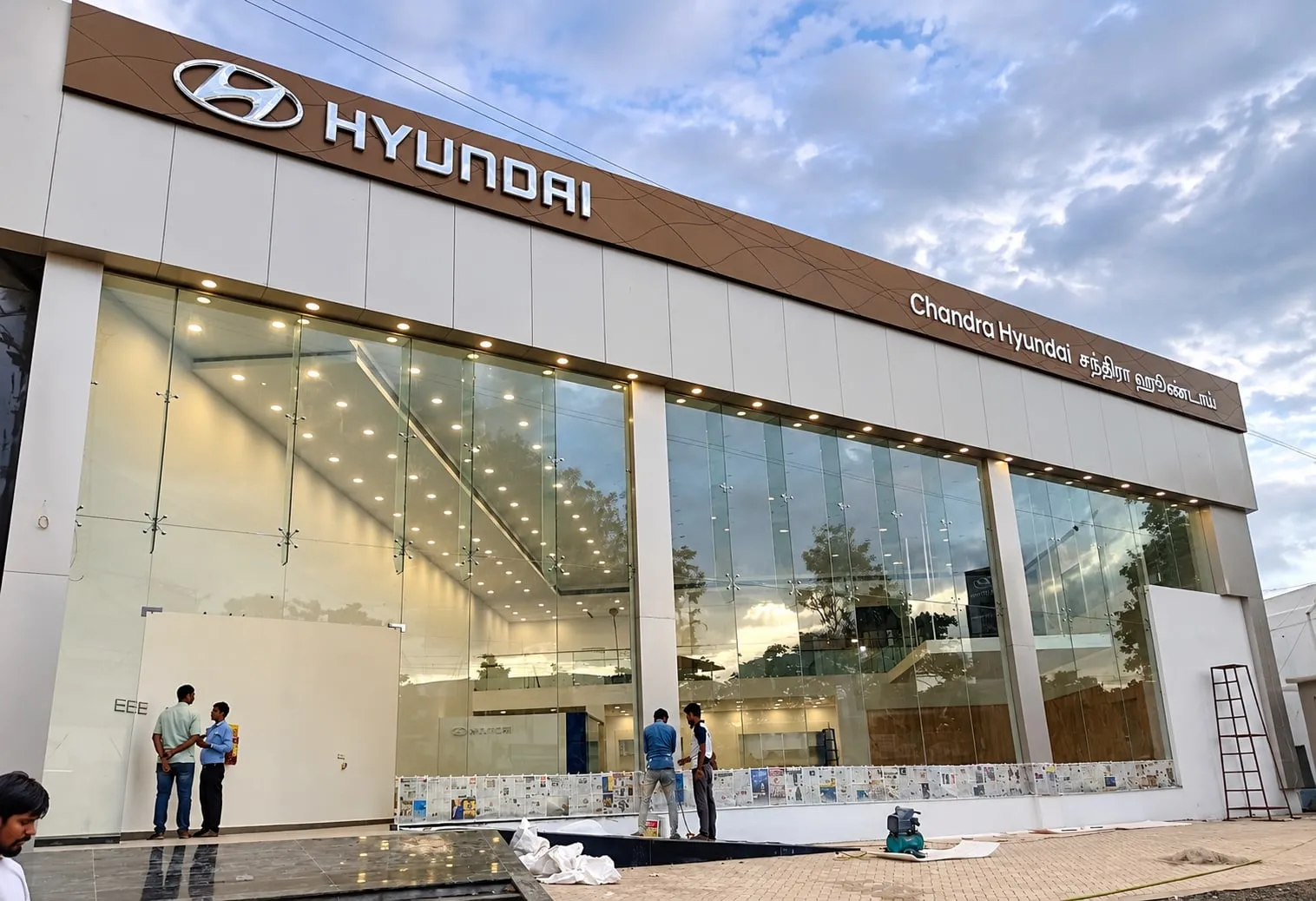
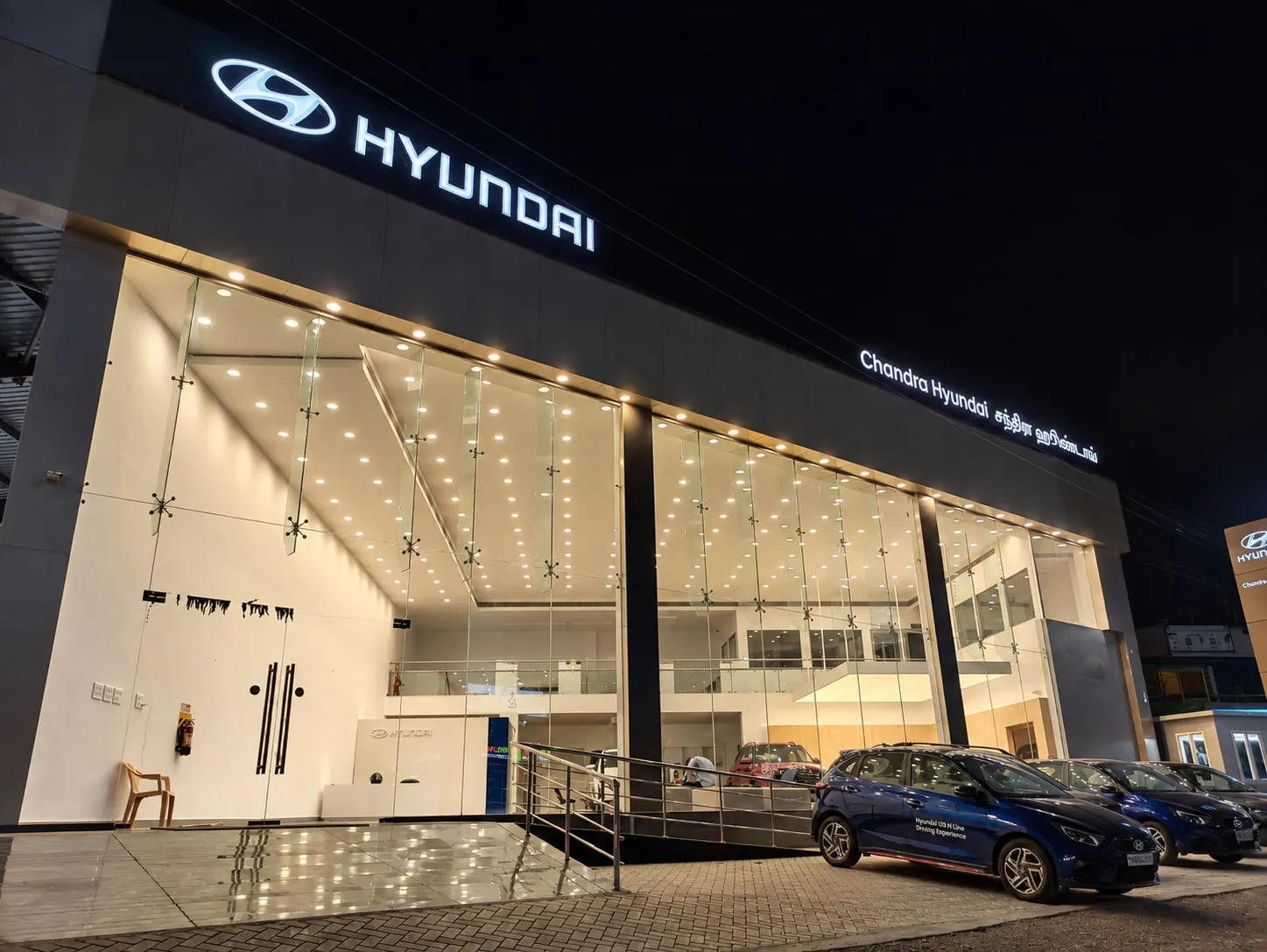
The Chandra Hyundai showroom on Avinashi Road, Chinniyampalayam, Coimbatore is a good example of our spider glazing: a tall frameless glass front held on spider fittings, with an ACP fascia band above. Projects like this are planned by our engineers, Er. Sanjay M. and Er. Aravind M., because point-fixed glass leaves little room for error in hole positions, structure alignment or glass specification.
Unlike framed glazing, spider glazing puts all the load from wind and the glass's own weight through a few small bolt points. That makes the specification of the glass, the hole details and the support structure central to safety, not just to looks. Below we explain how the system works, which fittings and glass are typically used, and what drives the cost of a spider glazed front.
Why choose spider glazing
Near-total transparency
With no frames or mullions in front of the glass, the view into a showroom or lobby is almost uninterrupted from the road.
Premium, architectural look
Polished stainless steel spiders on clear glass signal quality, which is why it is a favourite for car showrooms and flagship stores.
Large panel sizes
Point fixing allows big glass panels, so tall double-height fronts can be glazed with few joints.
Flexible support options
The glass can be carried on steel tubes, slim glass fins or tensioned cables, depending on how visible you want the structure to be.
Movement-friendly fittings
Articulated bolts in the spider arms let the glass flex slightly under wind instead of building up stress at the holes.
Works with doors and canopies
Frameless glass doors on patch fittings and spider-supported glass canopies can be integrated into the same front.
Options & technical details
Typical choices we discuss with clients. The final specification is fixed after a site visit.
| Glass type | Toughened glass, typically 10 mm or 12 mm for vertical fronts; laminated toughened for overhead and larger or higher panels |
|---|---|
| Glass processing | Holes drilled and countersunk before toughening; heat-soak testing recommended |
| Spider fittings | Stainless steel, usually SS 304 inland or SS 316 for coastal and humid locations; 1-, 2-, 3- and 4-arm types |
| Bolts | Articulated (routel) bolts, countersunk or button-head finish |
| Support structure | Painted MS or SS tube frame, glass fins, or tension rod/cable trusses |
| Joints | Weather silicone between panels, no exposed frames |
| Finish of fittings | Satin (brushed) or mirror-polished stainless steel |
Spider Glazing, explained in drawings
How spider glazing is installed
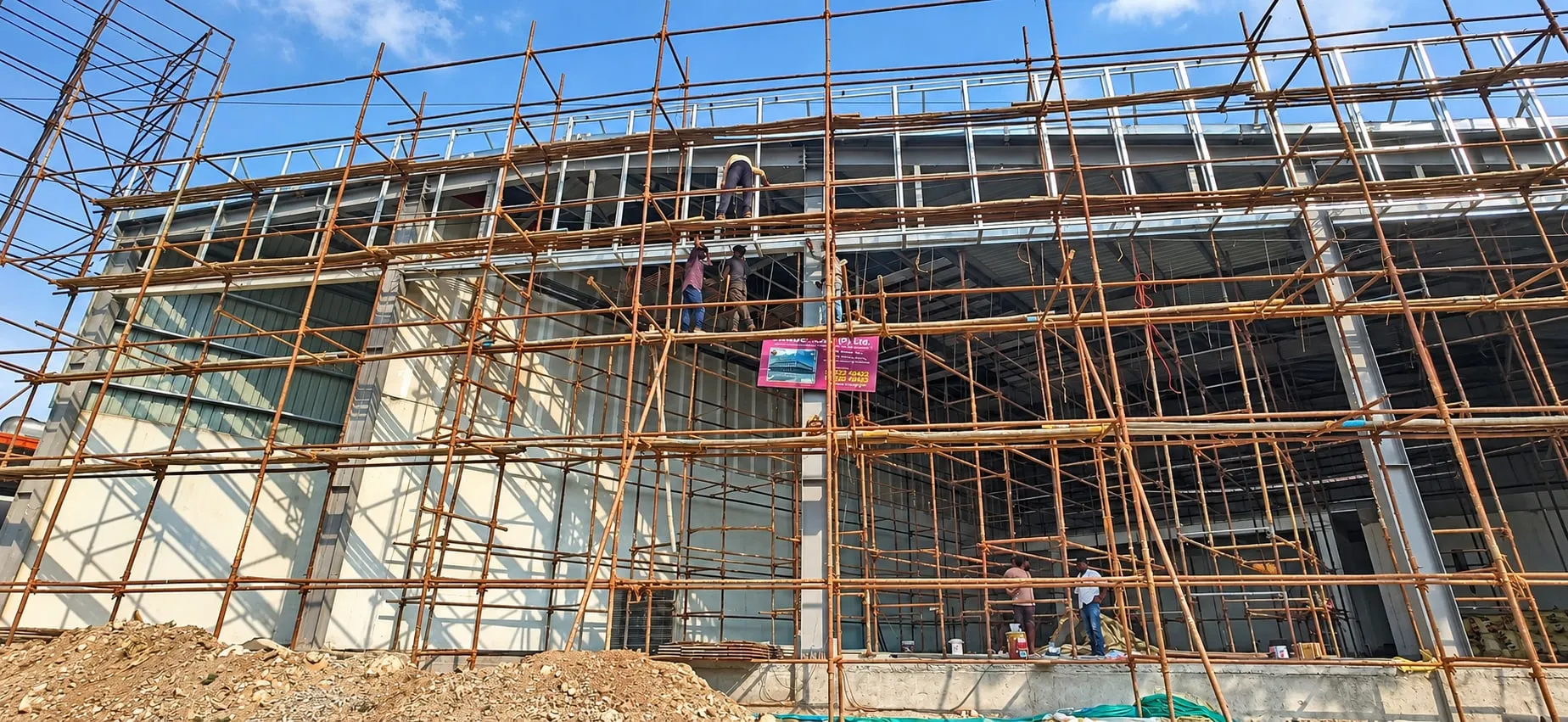
Spider glazing starts with precise geometry. Because the glass is drilled at the factory before toughening and cannot be drilled afterwards, every hole position has to match the spiders on site within tight tolerances. We survey the opening, fix the support structure, and only then finalise the glass drawings so that the holes, the spider centres and the structure all line up.
The support structure is erected first, whether that is a painted steel tube frame, glass fins or a tensioned cable system, and the spider fittings are bolted to it and aligned. Glass panels are lifted into place, the articulated bolts are fitted through the holes with the correct bushes and washers so steel never touches glass directly, and each panel is adjusted for line and level before the joints are sealed with weather silicone.
Glass handling is a specialist task. Large 12 mm panels are heavy, and a chipped edge or a knock near a hole can lead to breakage later. Panels should be lifted with suction lifters from proper staging, and each panel's edges and holes inspected before it goes up.
Spider glazing vs structural glazing
Both systems give a modern all-glass look, but they work differently. Structural glazing bonds glass to a hidden aluminium frame with structural silicone, so the frame grid sits just behind the glass. Spider glazing has no frame grid at all; the glass hangs from point fittings, and the visible elements are the polished spiders and whatever support structure sits behind.
Spider glazing is usually chosen for showroom fronts, lobbies and atriums where maximum transparency is the goal. Structural glazing is more common on multi-storey office facades, where double-glazed units, opaque spandrel zones and floor-by-floor framing are easier to handle. Many buildings use both: spider glazing at the entrance and structural glazing above.
What affects the cost of spider glazing
The glass is the main cost: thickness, whether it is single toughened or laminated toughened, heat-soak testing, panel sizes and the number of holes all add up. The spider fittings and bolts are the next big item, and SS 316 costs more than SS 304, which matters for coastal sites like Chennai and Kochi where salt air attacks lower grades.
The support structure can vary widely, from a simple painted steel frame to glass fins or cable trusses. Height, access for lifting equipment, glass doors and canopies, and how much the opening needs to be corrected also affect the price. Share the opening size and photos on WhatsApp and we will visit and give you a free, itemised quote.
Spider Glazing projects by Cladex
Spider Glazing: questions answered
What is spider glazing?
Spider glazing is a frameless, point-fixed glass system. Toughened glass panels are drilled near the corners and held by stainless steel spider fittings, each with one to four arms, which are mounted on a steel, glass-fin or cable support structure. Because there are no frames around the glass, the facade looks almost completely transparent, which makes it popular for showrooms and lobbies.
Which glass thickness is used for spider glazing?
For vertical showroom fronts, 10 mm or 12 mm toughened glass is typical, chosen according to panel size, height and wind exposure. Overhead spider canopies and some larger or higher panels should use laminated toughened glass so the broken pieces stay bonded to the interlayer if a pane fails. All holes must be drilled before the glass is toughened.
What is the cost of spider glazing in Coimbatore?
Spider glazing cost depends on the glass specification (thickness, laminated or not, heat-soaked or not), panel sizes and hole count, the stainless steel grade of the spider fittings, the type of support structure, the height and access, and any doors or canopies. Cladex surveys the opening and shares a free itemised quote on WhatsApp instead of quoting a flat rate.
Which steel grade is best for spider fittings?
Spider fittings are usually made from stainless steel grade SS 304 or SS 316. SS 304 is widely used for inland and sheltered locations. SS 316 contains molybdenum, which gives better resistance to chlorides, so it is the better choice for coastal cities like Chennai and Kochi and for poolside or very humid sites where salt or moisture would cause staining on lower grades.
Is spider glazing safe?
Yes, when it is properly engineered. Safety depends on using toughened or laminated toughened glass of the right thickness, accurate hole drilling before toughening, articulated bolts that let the glass flex under wind, bushes that prevent steel-to-glass contact, and a support structure sized for the loads. Heat-soak testing of the toughened glass further reduces the risk of spontaneous breakage.
Can spider glazing be used for a glass canopy?
Yes. Spider fittings are often used to support glass canopies over entrances. For any overhead glass, laminated toughened glass is the right specification, because if a pane breaks the fragments stay bonded to the interlayer instead of falling. The canopy also needs a slight slope and proper sealing so rainwater drains away rather than ponding on the glass.
How do you clean a spider glazed facade?
Clean the glass with water and a mild glass cleaner using a squeegee or soft cloth, and wipe the stainless steel fittings with a soft cloth to remove dust and salt deposits. Avoid abrasive pads, which scratch both glass and polished steel. Periodically check the silicone joints and fittings, especially before the monsoon, and get any damaged sealant replaced early.
Used in
Related guides
- ACP vs Glass Facade: An Engineer's Comparison for South Indian Buildings
- How to Choose a Facade Contractor for ACP and Glazing Work
- Shop Front Elevation Ideas: ACP Fascia, Glass Fronts and Signage That Work
- Structural Glazing vs Curtain Wall: What Is the Difference and Which Do You Need?
- Toughened Glass Price: Cost Drivers, Quote Comparison and Red Flags
- Toughened vs Laminated Glass: Differences, Uses and When You Need Both
- What Is Spider Glazing? A Plain-Language Guide to Point-Fixed Glass Facades
Planning spider glazing?
Share your building details. Our engineers will suggest the right specification and send a measured quotation.
Spider Glazing near you
Spider Glazing quote
Send us your details. Your enquiry opens in WhatsApp and goes straight to our engineers.
Often combined with
Structural Glazing
Structural glazing is a facade system in which glass panels are bonded to a hidden aluminium frame with structural silicone sealant instead of being held by visible outer caps, giving a flush, all-glass look from outside. Cladex Elevations installs structural glazing for commercial buildings in Tamil Nadu and Kerala.
Explore Toughened GlassToughened Glass
Toughened glass, also called tempered glass, is safety glass that has been heated and rapidly cooled so it is roughly four to five times stronger than ordinary annealed glass of the same thickness and breaks into small, blunt pieces. Cladex Elevations supplies and installs toughened glass doors, shopfronts, partitions and facades in Tamil Nadu and Kerala.
Explore ACP & CladdingACP Signage & Fascia
An ACP fascia is a horizontal band of aluminium composite panels above a shop or showroom front that frames the glazing and carries the brand signage. Cladex Elevations builds ACP fascias, signage backing panels and shop front elevations for retail stores and showrooms in Tamil Nadu and Kerala.
ExploreSources & standards
Technical statements on this page follow Indian standards and established industry references. Always confirm project-specific requirements with your architect or structural consultant.
- IS 16231 (Part 3):2019 Use of Glass in Buildings — Fire and Loading · Bureau of Indian Standards (Public.Resource.Org copy, Internet Archive)Indian code on wind loading of glass, curtain walls and structural silicone glazing.
- IS 2553 (Part 1):2018 Safety Glass — Specification, Part 1: Architectural, Building and General Uses · Bureau of Indian Standards (Public.Resource.Org copy, Internet Archive)Indian specification for toughened and laminated safety glass, incl. nickel-sulphide spontaneous-breakage annex.
- Preamble for Architects (stainless steel grade selection) · Southern Africa Stainless Steel Development Association (SASSDA)Industry guidance: use grade 316 (not 304) stainless steel for exterior work within about 4 km of the sea.
- IS 875 (Part 3):2015 Design Loads for Buildings and Structures — Wind Loads · Bureau of Indian Standards (Public.Resource.Org copy, Internet Archive)Indian wind-load code: basic wind speeds by city, cyclone factor and pressures on cladding and glazing.
- SAE 316L stainless steel — Wikipedia · WikipediaMarine-grade 316 stainless steel used for spider fittings and railings.
- Tempered glass — Wikipedia · WikipediaDefinition of tempered (toughened) glass and how it breaks.
Planning a new facade or a makeover?
Talk directly to our engineers. Send photos or a drawing on WhatsApp and get practical options for your building.